
Messi Retires from Argentina: 207 Caps, 125 Goals, and a Letter Written Two Days After the Final
The eight-time Ballon d'Or winner has confirmed he is stepping away from the Argentina national team, a decision he says he made in the immediate aftermath of the 2026 World Cup final in New Jersey — and one the death of his father, Jorge Messi, on 8 August, has only hardened.
The Announcement, in His Own Words
Messi posted the news on his social channels on the evening of 31 August 2026 (Argentina time), more than six weeks after the World Cup final in New Jersey. The Argentine Football Association followed with its own message minutes later. The framing was not triumphant, and it was not bitter — it was tired.
"It was a decision that hurt — and still hurts deep down — but I understand that the time has come. I always gave it my all — not just in these last few years when we won everything, but before that too. I always fought and left everything on the field for this jersey, to bring you joy and make you feel proud to be Argentine through football."
He confirmed the letter itself had been written on 21 July, two days after the World Cup final, and said the loss of his father Jorge — a long-time adviser and the man who negotiated the early stages of his career — had only made him more certain in the weeks since.
"Today, after everything that has happened with my father, I am more sure of my decision than I was on that day."
He also pointed forward. Argentina have a generation breaking through behind him — names that were already on the team sheet at the 2026 World Cup — and, in his words, those players "deserve their place."
Twenty Years, Six World Cups, One Number on the Back
Messi made his senior Argentina debut on 17 August 2005, aged 18, in a friendly against Hungary. He came on as a substitute and was sent off thirteen minutes later. The arc from that moment in Budapest to the letter posted from Rosario on Monday night is the longest of any Argentine in the modern game, and one of the longest in international football anywhere.
Why Now, and Not After 2022?
In 2022, after the World Cup win in Qatar, Messi said publicly that he would continue. He was 35, and the sensible answer was another Copa América cycle. He delivered it. By the end of 2024, he had a second continental title and a generation of young Argentines around him — Julián Álvarez, Enzo Fernández, Alexis Mac Allister, Cristian Romero, Lautaro Martínez — who were no longer supporting cast.
What changed between the World Cup final and Monday's post is partly football, partly everything else. Argentina lost to Spain in extra time, which means Messi finishes his international career with one World Cup won and one World Cup lost in the final. That is a respectable record and not, in itself, a reason to stop. The reason is the sum: six World Cup campaigns, four major finals before 2022, two more after, and a body that has been playing top-level football every season since 2004.
The loss of his father Jorge, who died in early August, is referenced directly in the letter. Jorge Messi was the man who moved a teenage Lionel to Barcelona, negotiated his first contract, and was a constant presence around the family and the team. The post stops well short of saying he is retiring for that reason alone — but the line "after everything that has happened with my father" is the emotional centre of the message, and there is no reason to read it any other way.
What Argentina Lose, and What They Already Have
Argentina have lost, definitively, a player who is statistically the most capped and the most prolific in the history of a national team that has won three World Cups. There is no clean replacement for 207 caps and 125 goals. What they have, instead, is a squad that does not need to be rebuilt — it only needs to be recalibrated.
Lionel Scaloni's side that started the 2026 World Cup final against Spain — Emiliano Martínez; Molina, Romero, Otamendi, Tagliafico; De Paul, Enzo Fernández, Mac Allister; Messi, Julián Álvarez, Di María — will not all be available in 2030. Otamendi and Di María have already retired. But the spine is young, the system is settled, and the pathway from the Under-20 World Cup into the senior side is, for the first time in a generation, a smooth one. Scaloni himself has hinted he will stay.
The most likely immediate effect, then, is a return to the formation Argentina used around Messi between 2019 and 2022, with a deeper-lying No. 10 and a more conventional centre-forward. Julián Álvarez, who scored four goals at the 2026 World Cup, is the most natural fit. Whether that is a clean answer or only the first draft of one is a question for 2027.
What Happens to the Number 10 Shirt
The Argentine FA has not, as of Tuesday, said anything about whether the number 10 will be retired in the same way the national team has, at times, honoured other greats. The Argentine federation has historically been more pragmatic about shirt numbers than, for example, the United States or Italy — Maradona's 10 was worn after him by other players without ceremony, and the same is likely here. The number is the number; the player was the player. Don't be surprised to see it on a teenage debutant in the next Copa América cycle.
The Numbers, in One Place
| Statistic | Number | Note |
|---|---|---|
| Senior caps | 207 | Argentina record, men |
| Senior goals | 125 | Argentina record, men |
| World Cups | 6 | 2006 · 2010 · 2014 · 2018 · 2022 · 2026 |
| World Cup goals | 13 | Argentina record, men |
| Copa América titles | 2 | 2021 · 2024 |
| Finalissima | 1 | 2022 (vs Italy, Wembley) |
| Olympic gold | 1 | 2008 (Beijing) |
| Ballon d'Or | 8 | 2009, 2010, 2011, 2012, 2015, 2019, 2021, 2023 |
Two records worth restating because they tend to slip in long summaries. He is the only player in men's international football to score in five different World Cups. And he is the only man to win the World Cup, the Copa América, the Finalissima, the Olympic gold and the Under-20 World Cup — the full set at senior and youth level.
What to Wear This Week
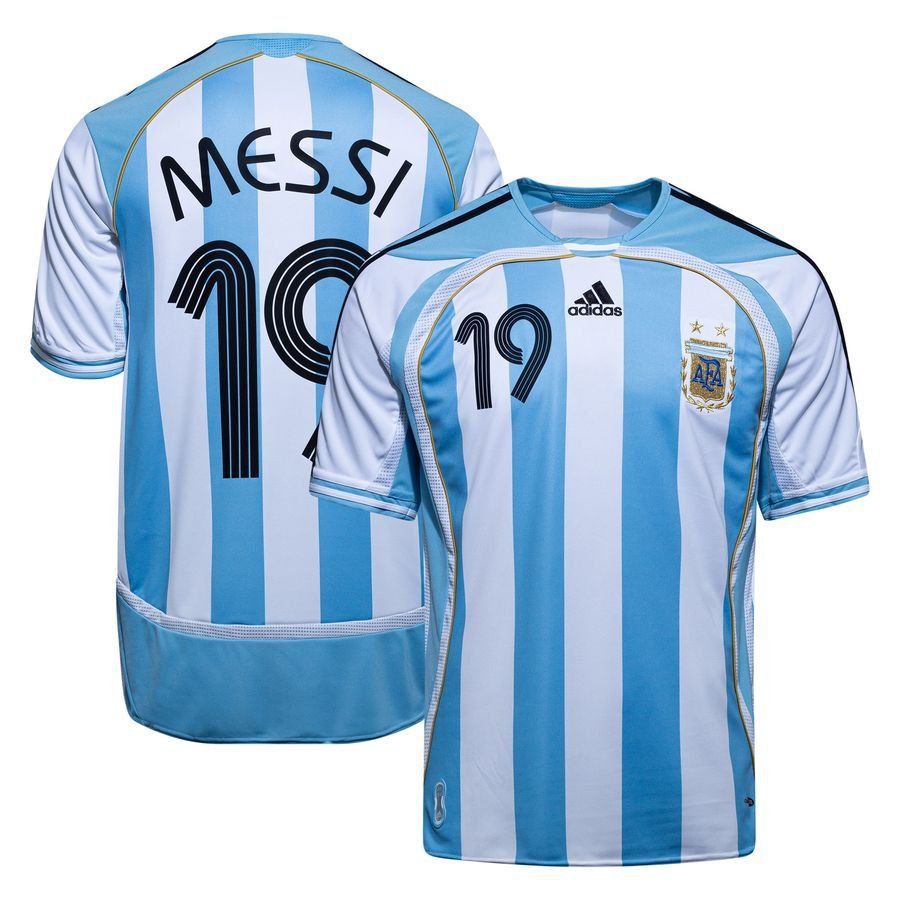
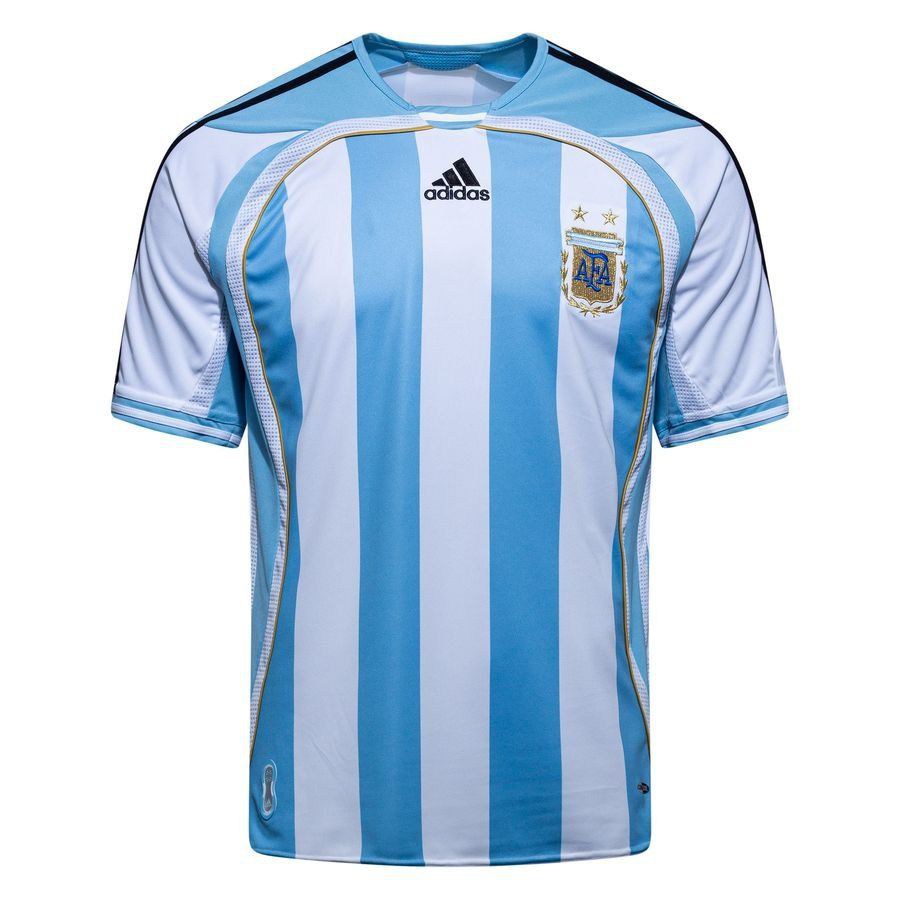
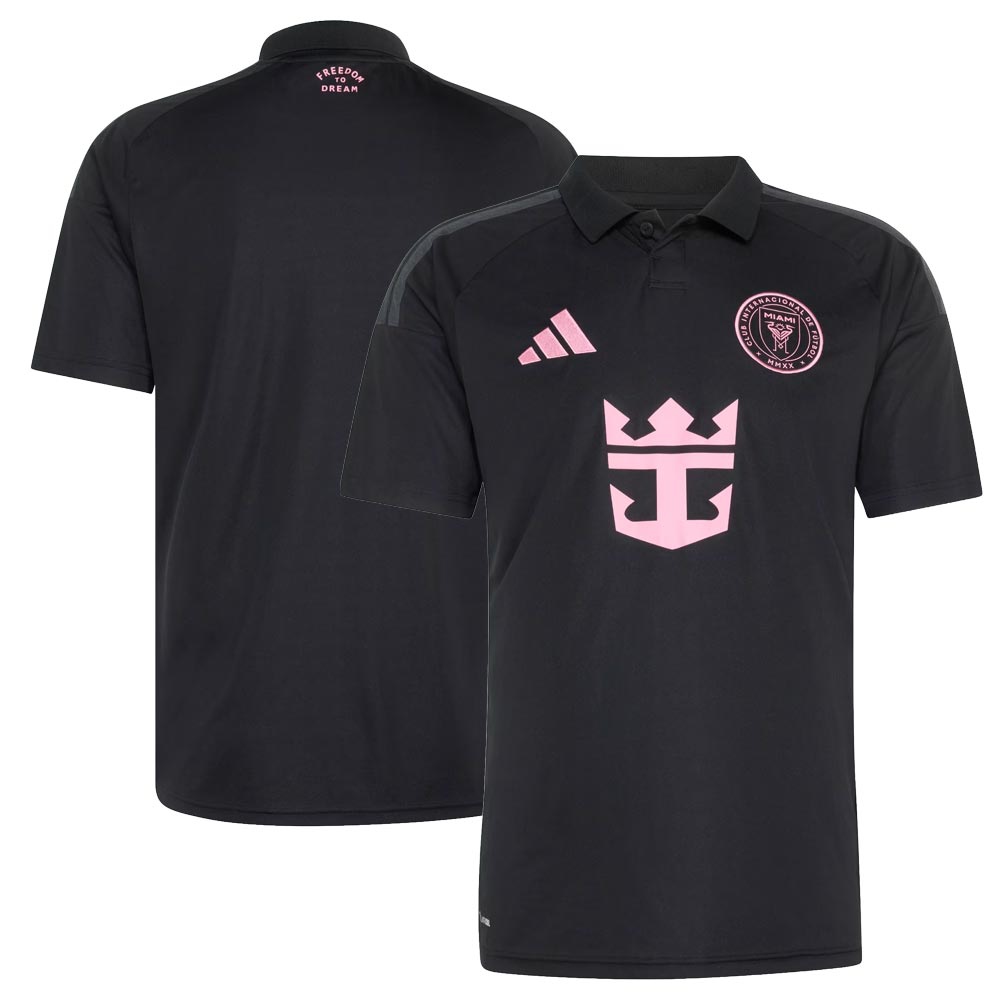
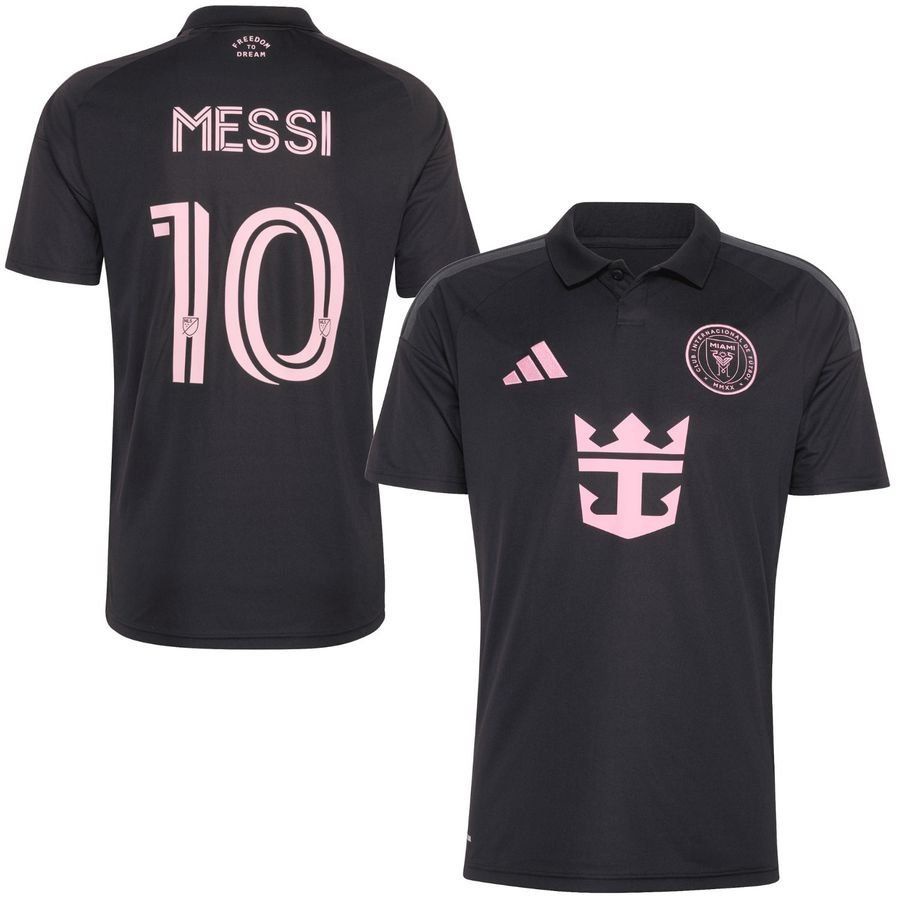
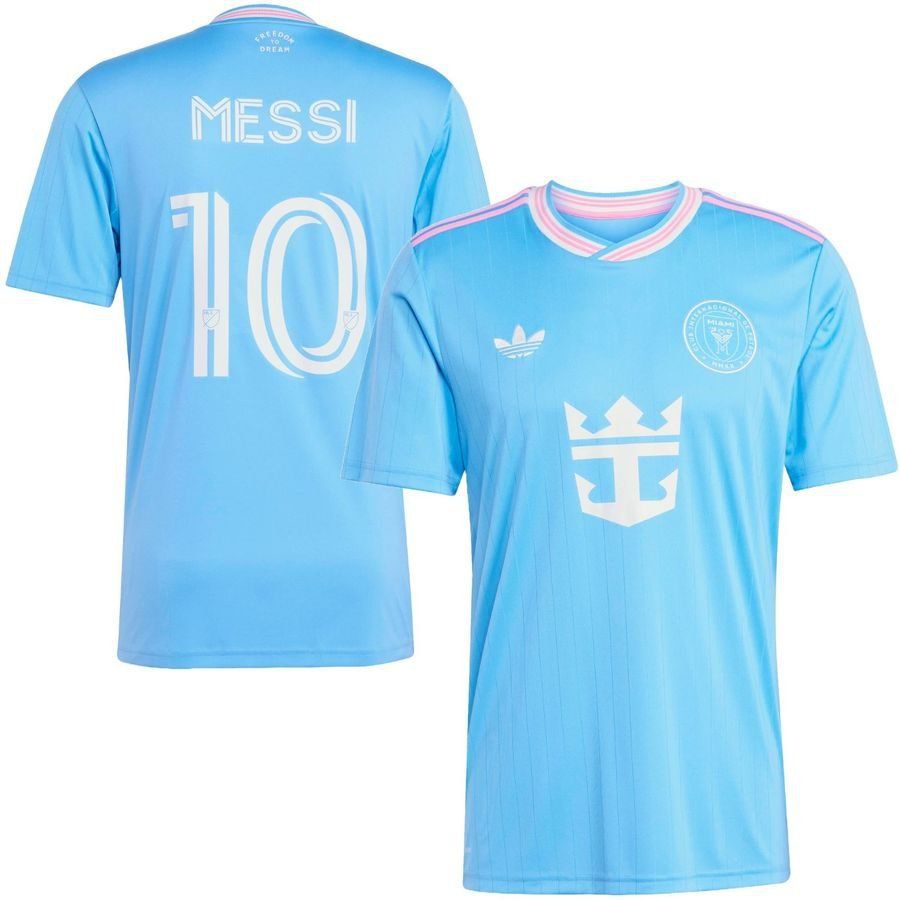
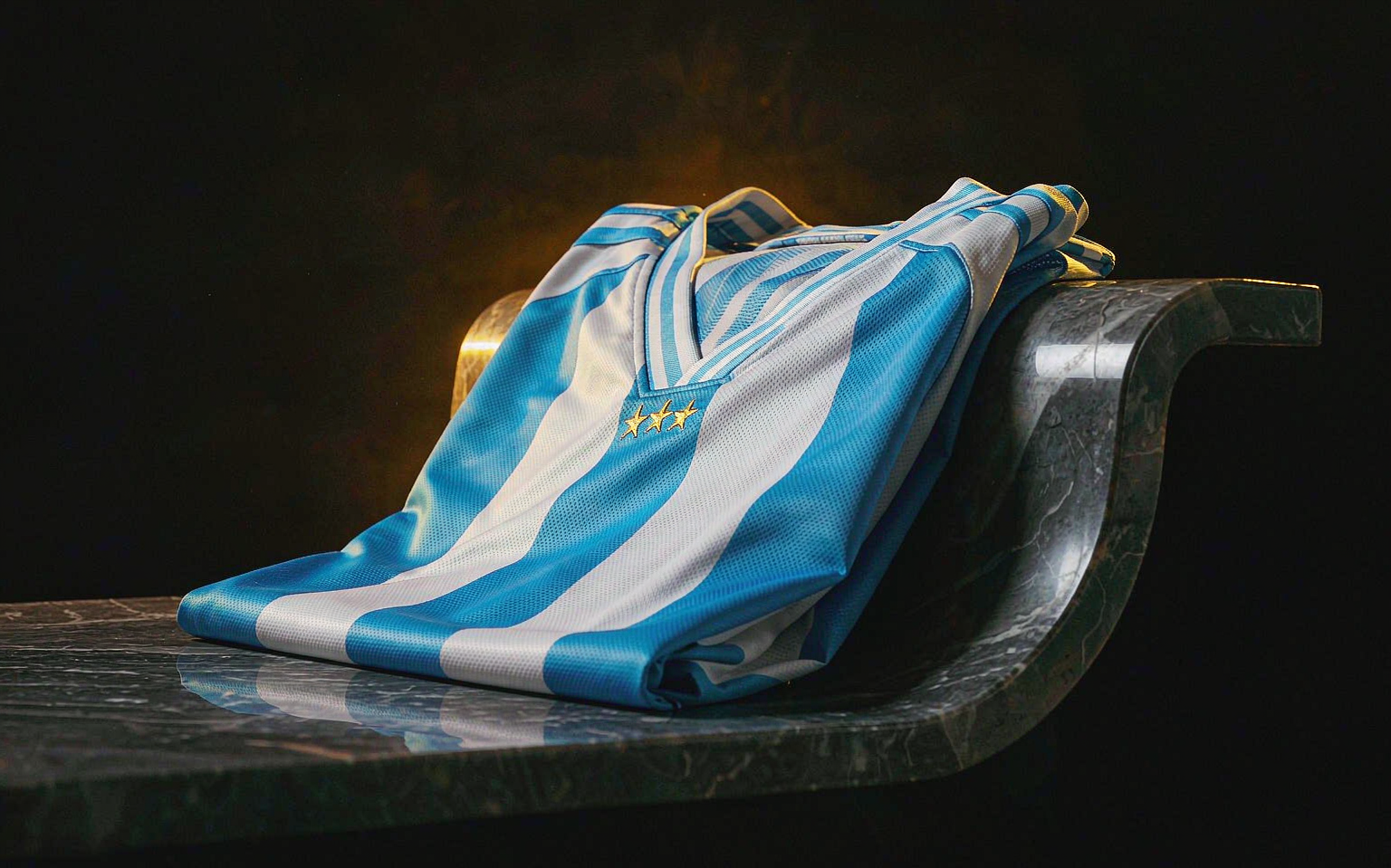
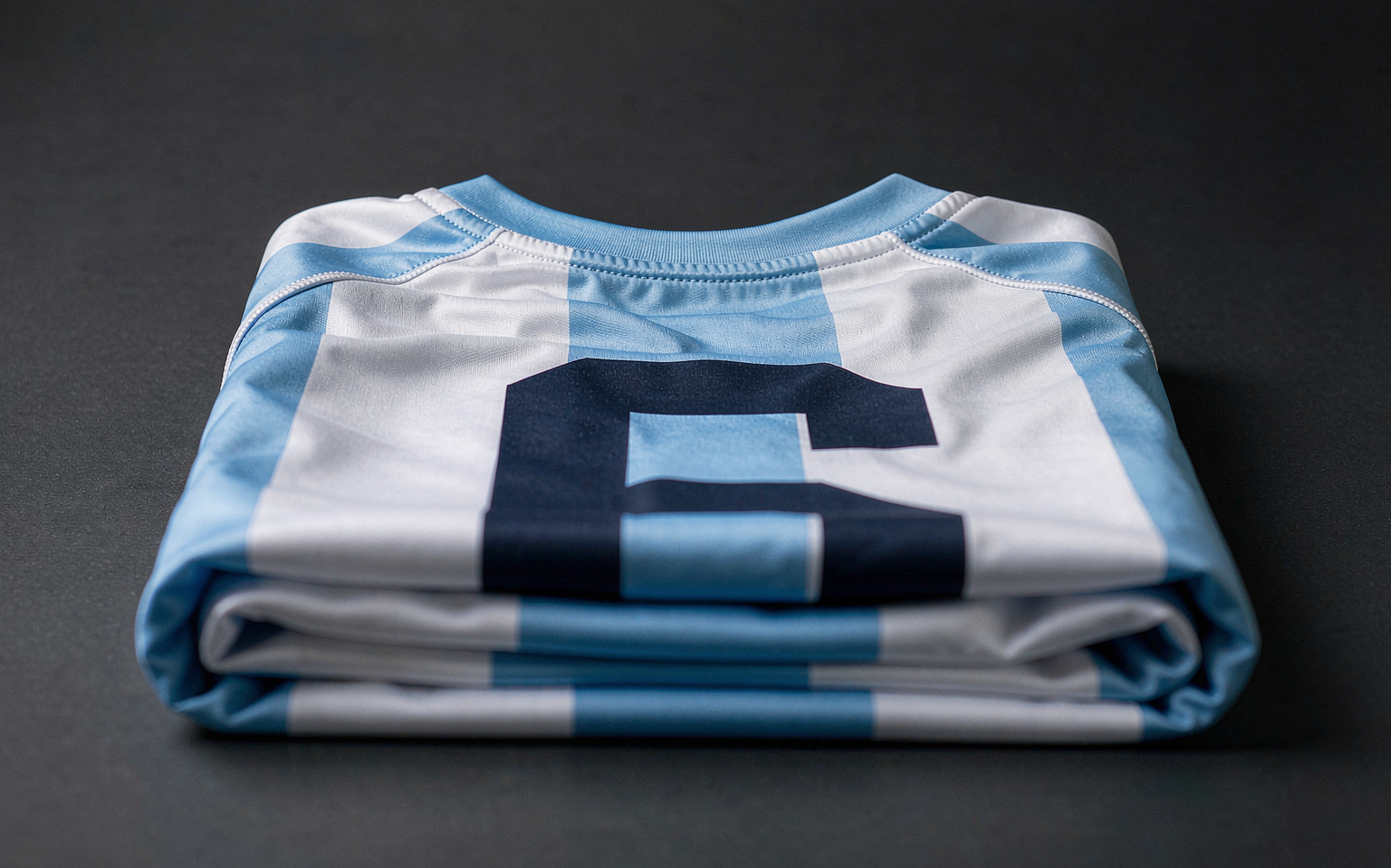
If you want to mark the moment with something in the wardrobe rather than on social media, here are the shirts that carry the story. First, the current set — the three-star kit from the 2026/27 cycle, in both home and away. Second, the 2006 home shirt (the one he wore at his first World Cup) and a current Inter Miami shirt, which is the kit he will pull on for the rest of his playing career.
Argentina 26/27 Three-Star
Swipe to browse 5 kits


Argentina 2006 & Inter Miami
Swipe to browse 5 kits